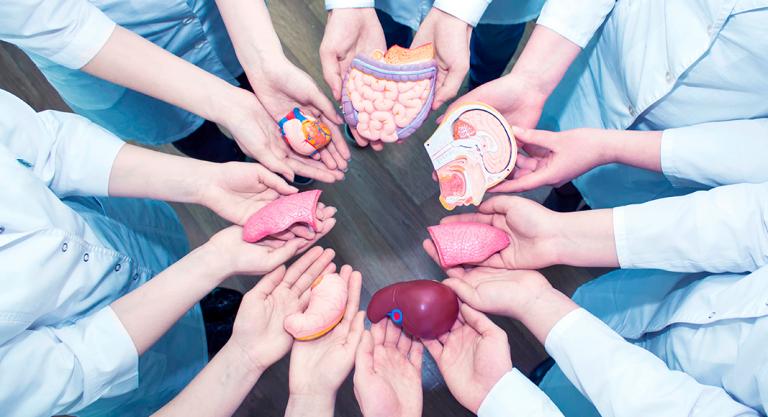

Xenotransplants are transplants of cells, tissues or organs between animals belonging to different species.
Xenotransplants allow provisionally supplying the lack of donors.
In 2020, when the pandemic was at its peak, this type of technology became a widely used method of offering assistance to sick patients, telematically.
A team of researchers has communicated to the world the possibility of successfully transplanting an organ from a genetically modified animal into a human being. Its purpose is the creation of new revolutionary and predictive techniques and technologies, in order to diagnose diseases in advance and prevent their development.
Xenotransplantation presents great challenges due to the biological and immunological differences between the different species. Currently, one of the main problems facing organ transplantation is the low supply of organs available for transplantation and the large number of patients waiting.
Currently, clinical trials are being evaluated in which a considerable number of patients want to be involved in order to safely and clearly estimate the efficacy of xenotransplantation.
There are many teams interested in developing xenotransplantation technology. So far, preclinical experiments have been done successfully transplanting organs from pigs to baboons. They have managed to make these last more than 6 months with kidneys and, in a few cases, up to almost 3 years with hearts.
Xenotransplantation was invented by Hardy in 1964(6) and he performed the first chimpanzee heart xenotransplantation with failure within 2 hours due to anatomical incompatibility.
Disadvantages of a xenotransplant
One of the biggest disadvantages of animal organ transplants, compatibility. It is already difficult to find organs from other humans that do not generate rejection in the recipient, but in the case of xenotransplants the risk of acute rejection increases.
Pigs are animals whose organs are similar in size to human organs.
Organ transplant risk
The immediate risks associated with organ donation surgery include pain, infection, hernia, bleeding, blood clots, wound complications, and in very few cases, death.
https://www.nationalgeographic.com.es/ciencia/que-son-xenotrasplantes-y-por-que-estan-vuelta_17475
https://www.cun.es/diccionario-medico/terminos/xenotrasplante